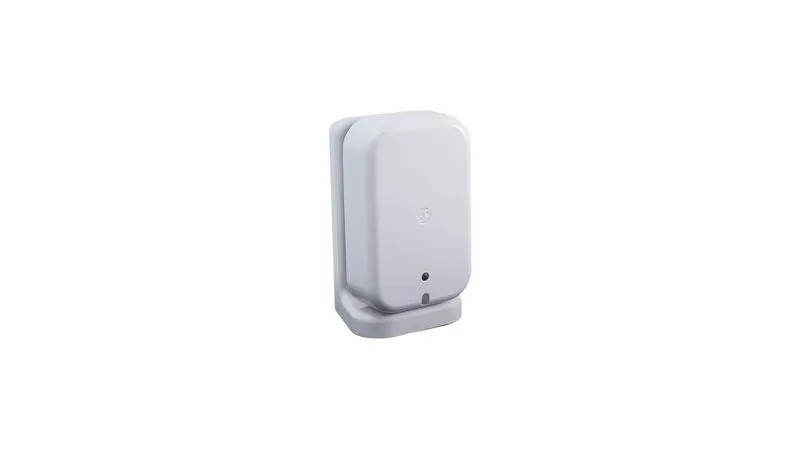
mmWave Presence Sensors and Thread in 2026: Aqara FP400 vs Shelly Presence Gen4, Placement and Home Assistant
- News
- Rocks on Galaxy
- Maison connectee
- 19 Oct, 2026
- 0
Every smart home owner knows the scene: you sit still on the sofa, the motion sensor decides the room is empty and the lights go out. In 2026 that problem has a mainstream answer. mmWave radar presence sensors such as the Aqara FP400 and the Shelly Presence Gen4 detect people who are reading, working or sleeping, count them and split a room into zones. Many of them run on Thread, the low-power mesh behind Matter, which is itself evolving fast. This guide explains how the technology works, compares the two sensors that define the category this autumn, and shows how to place and automate them.
Motion versus presence: what changes
| PIR motion sensor | mmWave presence sensor | |
|---|---|---|
| What it detects | Heat moving across its field | Tiny movements, including breathing, via radar |
| Someone sitting still | Often missed after a few minutes | Detected |
| Counting people, zones | No | Yes on recent models (up to 10 people) |
| Power | Battery, often years | Usually continuous USB-C power |
| False triggers | Sunlight, heaters | Fans, curtains, pets, robot vacuums (mitigated by filtering) |
| Best for | Hallways, stairs, quick on/off | Living rooms, offices, bedrooms, bathrooms |
The practical rule: combine both. A PIR sensor reacts instantly when you enter; the mmWave sensor keeps the room "occupied" as long as someone is there.
The two sensors that define autumn 2026
| Specification | Aqara FP400 | Shelly Presence Gen4 |
|---|---|---|
| Radar | 60 GHz mmWave, 120° field of view | mmWave |
| Coverage | Up to 10 × 8 m (about 860 sq ft) | Wall: 140°, up to 650 sq ft (about 60 m²); corner: 90°, up to 525 sq ft |
| People tracked | Up to 10, with counting | Up to 10 |
| Zones | Grid of 0.5 × 0.5 m cells, up to 8 zones in the Aqara app | Up to 10 configurable zones, pet and height filters |
| Light sensor | Yes (illuminance) | Yes (dark, twilight, bright) |
| Radios | Thread or Zigbee | Wi-Fi, Zigbee 3.0, Bluetooth; Matter (not all at once) |
| Matter exposure | Over Thread: one presence plus one illuminance sensor for third-party platforms | Matter plus local MQTT, REST API, scripts and webhooks |
| Power | USB-C, 5 V / 1 A | USB-C, continuous; no battery |
| Price | No MSRP in Aqara's announcement | $84.99 (US), €69.90 (EU) |
Aqara FP400
Aqara's Spatial Multi-Sensor FP400 went on sale worldwide on September 16 in the US, UK, France, Germany, Italy and Spain. Its "AI Spatial Learning" maps the room and filters out pets, airflow and robot vacuums. In Thread mode it is a Matter-over-Thread device that needs only a third-party Thread border router, with no Aqara hub, for Apple Home, Alexa, Google Home, Home Assistant, Homey or SmartThings. In Zigbee mode it needs an Aqara hub to bridge to Matter. The fine print matters: HomeKit News and Aqara's own notes say third-party platforms over Thread see one overall presence sensor plus illuminance, not every zone drawn in the Aqara app. An FP400 Pro version targets assisted living.
Shelly Presence Gen4
Launched on October 15, the Presence Gen4 targets DIY users. The Verge confirmed availability at $84.99 in the US. Ten independent zones allow a desk lamp that turns on only when you sit at the desk, or a home theatre that wakes when you drop onto the sofa. Pets can be included or ignored, and height thresholds keep the robot vacuum from triggering anything. Being Wi-Fi capable, it needs no hub, and local MQTT, scripts and webhooks keep automations working without internet. The only real constraint is permanent USB-C power, so plan placement near a socket.
What to remember
- mmWave detects still people; pair it with a fast PIR sensor at the door.
- Aqara FP400 over Thread needs a Thread border router but no Aqara hub; third parties see whole-room presence, not every zone.
- Shelly Presence Gen4 ($84.99 / €69.90) offers 10 zones and local MQTT, but needs continuous USB-C power.
- Thread keeps evolving: Hue bulbs now run Zigbee and Matter at once, Shelly's ThreadLink and a Sub-GHz Thread are coming.
Where to put a presence sensor
- Corner or wall at 1.5–2 m for living rooms, aiming across the seating area, not at a window.
- Ceiling for bathrooms and kitchens, where cabinets block side views (FP400 supports ceiling and recessed mounts).
- Away from moving objects: fans, curtains in a draft, aquarium pumps.
- Not pointing through thin walls: radar can see into the next room; draw exclusion zones.
- Close to power: both sensors require constant USB-C power.
A Home Assistant automation that never leaves you in the dark
The classic pattern combines a fast trigger and a slow release:
automation:
  - alias: "Living room: light follows presence"
    mode: restart
    trigger:
      - platform: state
        entity_id: binary_sensor.living_presence
        to: "on"
      - platform: state
        entity_id: binary_sensor.living_presence
        to: "off"
        for: "00:03:00"
    condition:
      - condition: numeric_state
        entity_id: sensor.living_illuminance
        below: 40
    action:
      - if:
          - condition: state
            entity_id: binary_sensor.living_presence
            state: "on"
        then:
          - service: light.turn_on
            target: { entity_id: light.living }
        else:
          - service: light.turn_off
            target: { entity_id: light.living }
Use the sensor's own illuminance reading instead of a fixed time, and the light will adapt to the season. Presence also makes heating smarter, as explained in our smart thermostats and radiator valves guide.
Thread 101 for presence sensors
Border routers
A Thread device needs at least one border router to reach your Wi-Fi network: a recent HomePod mini or Apple TV, a Google Nest hub, a SmartThings hub, or a Home Assistant server with a Thread dongle. Home Assistant 2026.9 added a Matter network map that shows border routers and links, which our Home Assistant 2026 guide describes.
Routers in the mesh
Mains-powered Thread devices relay traffic; battery devices do not. That is why the October 5 Philips Hue firmware 1.164.2 matters: on hardware platform 100b-129 (2026 products and the autumn-2025 E27 and GU10 Thread bulbs), it adds Zigbee and Matter concurrency in bridgeless mode, according to Hue's release notes. A bulb can stay on the Hue Bridge and still join a Matter Thread network, strengthening the mesh.
What is coming next
Shelly is developing ThreadLink, which carries all its devices' TCP/IP traffic over Thread, not only Matter. The free, optional update is planned before the end of the year, starting with the PowerStrip 4 Gen4 and Shelly 1 / 1PM Gen4. On September 21, the Thread Group approved work on a Sub-GHz version of Thread for long-range commercial and industrial IoT. It is a standards-track decision, not a product: no specification, brand or Matter timeline yet, so do not wait for it.
Room-by-room ideas that work
Home office
Draw a zone around the desk chair. The desk lamp, monitor plug and radiator follow that zone only, so walking past the desk does nothing, while sitting down for a call keeps everything on even if you do not move for an hour.
Living room
Split the room into "sofa", "dining table" and "passage". Dim the ceiling light when the sofa zone is occupied after sunset, switch to bright light at the table, and ignore the passage zone entirely. With people counting, you can also tell the difference between one person reading and a family evening.
Bathroom
Radar keeps the light on during a long shower, where a PIR sensor typically gives up. Mount it on the ceiling, away from the extractor fan, and use the presence state to run the fan for a few minutes after the room empties.
Bedroom
Presence during the night can lower the heating setpoint, block noisy automations such as a robot vacuum schedule, and switch hallway lights to a dim night level when someone gets up.
Privacy, local control and brand stability
Radar is a privacy win over cameras: it records no image. Local control is the second safeguard. Shelly states that Presence Gen4 works locally through MQTT, scripts and webhooks, and FP400 over Thread talks directly to your Matter controller. One thing to watch: Schneider Electric launched a bid of about €1.2 billion for Shelly in late September. A takeover rarely changes a product overnight, but it is worth following the brand's roadmap, particularly for ThreadLink.
Which hub do you need?
None, in many cases. Shelly Presence Gen4 works on Wi-Fi. FP400 in Thread mode needs only a border router. If you are still choosing a controller, our Matter hub buyer's guide compares this year's options, and the Homey Pro 2026 review covers one more alternative to Home Assistant.
FAQ
Can a presence sensor run on batteries?
Neither FP400 nor Presence Gen4 can: both need continuous USB-C power because radar runs constantly.
Will Apple Home see all my FP400 zones?
Not over Thread. Third-party platforms see one presence sensor and one illuminance sensor; zones stay in the Aqara app.
Does mmWave see through walls?
It can detect movement behind thin partitions. Use exclusion zones and aim the sensor away from shared walls.
Is a camera involved?
No. Both sensors use radar, which is a strong argument for bedrooms and bathrooms.
Do I need Thread for Shelly Presence Gen4?
No. It supports Wi-Fi, Zigbee and Matter, and works locally with Home Assistant over MQTT.
Can I use two sensors in the same room?
Yes, but aim them so their fields overlap as little as possible and combine their states in a Home Assistant group.
Sources: Aqara, HomeKit News, The Verge, Shelly, Philips Hue, Thread Group.