Homey Pro vs Home Assistant in 2026: who should pick which hub
- News
 Andrea R.
- Maison connectee
- Published
- 0
If you want a polished multi-radio hub you can set up in an afternoon, pick Homey Pro. If you want an open platform you assemble yourself — with deeper integrations, YAML when you need it, and a lower hardware floor — pick Home Assistant. That is the late-2026 decision in one line.
This is a comparison and decision guide, not a second product score for both sides. Rocks on Galaxy tested Homey Pro hands-on (9/10). Home Assistant here is documented analysis plus DIY experience from related gear we did test: a Raspberry Pi 5 kit, a Flash switch under Home Assistant, and a Third Reality Zigbee stack. We do not invent a Homey-style rating for Home Assistant as a boxed product.
Key takeaways
- Homey Pro (2026) is Athom’s local-first hub with Matter v1.5, Thread Border Router, Zigbee 3.0, Z-Wave 700, Bluetooth LE, Wi-Fi, infrared and (region-dependent) 433 MHz built in. List price is $449 / €449 after the 1 June 2026 raise.
- Home Assistant is free software. Official hardware starts around $199 / €179 for Home Assistant Green; Zigbee or Thread usually needs a separate radio such as Connect ZBT-2 (~$49 / €45).
- Homey wins on turnkey multi-protocol radios and Flow. Home Assistant wins on integration breadth, community pace (monthly releases such as 2026.11), and total cost if you already tinker.
- Our Homey Pro test praised automation power and protocol coverage; caveats were no built-in Ethernet (optional adapter) and the inability to join an existing Thread network.
- Matter and Thread are available on both paths, but the path to a working Thread Border Router differs: built into Homey Pro; add-on radio or a third-party border router for typical Home Assistant Green setups.
Decision matrix: Homey Pro vs Home Assistant
Prices and capabilities below are from vendor pages as of 6 November 2026. “Home Assistant” means the open-source platform plus typical official hardware (Green + radio), not every possible DIY PC.
| Criterion | Homey Pro (2026) | Home Assistant (typical Green path) |
|---|---|---|
| What you buy | Closed appliance + Homey OS | Software (free) + your hardware |
| List price (hub) | $449 / €449 | Green $199 / €179; Pi DIY often cheaper |
| Matter | Matter v1.5 on hub | Matter Server / integration (certified) |
| Thread Border Router | Built in | Needs capable radio (e.g. ZBT-2) or another BR on LAN |
| Zigbee | Built-in Zigbee 3.0 | USB stick / Connect ZBT-2 (Zigbee or Thread mode) |
| Z-Wave | Built-in Plus 700 | Separate Z-Wave stick (e.g. ZWA-2) |
| Ethernet on hub | Optional adapter | Gigabit on Green |
| Automation UX | Flow / Advanced Flow | UI automations + YAML when needed |
| Learning curve | Low–medium | Medium–high |
| Best for | Mixed radios, want one polished box | Max control, HACS, custom entities |
Homey Pro in late 2026: the turnkey multi-radio box
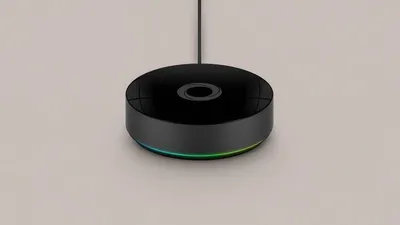
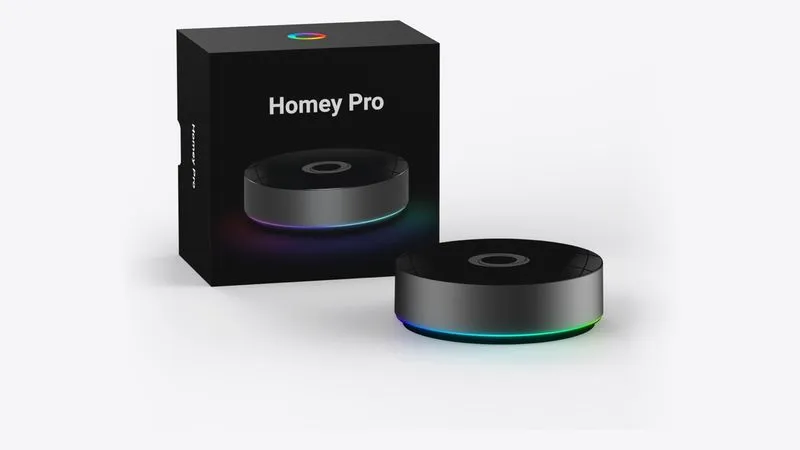
Athom positions Homey Pro as the full multi-protocol hub: Matter, Thread, Zigbee, Z-Wave, Bluetooth LE, infrared, 433 MHz and Wi-Fi on one device, according to the Homey Pro product page. The 2026 hardware doubles RAM to 4 GB versus the Early 2023 model while keeping the same radio set, as Athom explained when introducing Homey Pro (2026).
On 1 June 2026 the US/EU list price moved from $399 / €399 to $449 / €449, which Athom attributed mainly to RAM and eMMC cost pressure in its June 2026 price update. Remote access, App Store and cloud backups stay included without a Homey Pro subscription. Homey’s own 2026 product comparison still recommends Pro when you want the widest built-in radios and least accessory shopping.
What our hands-on Homey Pro test found
In our Homey Pro 2026 review we scored it 9/10. Strengths that stuck after two weeks: exceptionally powerful automation (Flow / Advanced Flow), broad protocol support, and fast responses. Limits we would not bury: Ethernet is not integrated (you need Homey’s optional adapter), and the hub could not join an existing Thread network in our setup — it creates its own as a border router. Ease of use scored 10/10; value 9/10; caveats 7/10.
That profile matches Homey’s marketing claim of “local-first”: compatible local devices and Flows keep working if the internet drops, while cloud-dependent brands and voice assistants still need connectivity. If your home mixes Z-Wave locks, Zigbee lights, infrared A/C and newer Matter sensors, Homey Pro’s all-in radios are the product argument.
Regional footnote from Homey’s comparison wiki: 433 MHz transmission is disabled on Homey Pro (and Homey Bridge) in the United States, Canada and South Korea. US readers should not buy Pro for 433 MHz remotes.
Home Assistant in late 2026: the open platform you assemble
Home Assistant is not a single SKU. The software is free and releases monthly. Hardware ranges from a spare mini-PC to Nabu Casa’s official boxes. For a fair price comparison we use the beginner path Homey buyers would otherwise consider: Home Assistant Green at $199 / €179 MSRP, plus a radio if you need Zigbee or Thread.
Green includes Gigabit Ethernet, 4 GB RAM and 32 GB eMMC, and no built-in Zigbee/Z-Wave/Thread radio. Nabu Casa’s FAQ on that page is explicit: Matter over Wi-Fi/Ethernet works once the Matter integration and Matter Server are set up; Thread-based Matter needs a Thread Border Router on the LAN, which can be an Apple/Google/Amazon unit you already own or a Home Assistant radio such as Connect ZBT-2. Official docs for the Thread integration still describe Thread support as a work in progress and note that the integration appears when a border router is detected.
Connect ZBT-2 is dedicated to either Zigbee or Thread (not both at once), at about $49 / €45 MSRP. That is a design choice Nabu Casa documents clearly: multiprotocol on one stick was unreliable in their testing. So a Homey-like radio stack on Home Assistant is Green + ZBT-2 (+ a Z-Wave stick if you need Z-Wave) — still often cheaper than Homey Pro, but more boxes and more decisions.
What Rocks’ HA-adjacent tests imply (without a HA product score)
We have not published a scored “Home Assistant Green review.” We have published DIY pieces that show what living with HA looks like:
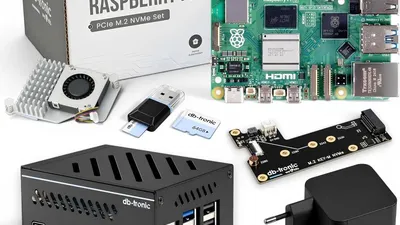
- The db-tronic Raspberry Pi 5 kit is a realistic self-hosted HA host when you refuse a sealed appliance.
- The Flash connected switch test shows HA’s strength: pairing a niche switch and driving it from automations once the integration path is clear.
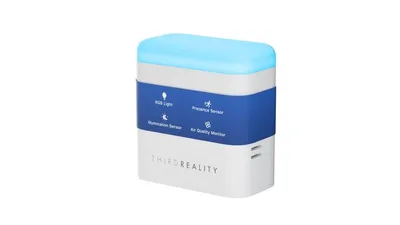
- The Third Reality Zigbee dongle and sensors show the USB-radio path that Homey Pro folds into the chassis.
Our pillar Home Assistant guide remains the orientation map. For protocol theory, use the Matter / Thread guide and the Zigbee vs Matter/Thread study.
November 2026 also shows HA’s release cadence: 2026.11 added Matter 1.5 camera support (live WebRTC), new radon triggers, bulk voice-assistant expose, and editor shortcuts. Homey ships a polished app; HA ships monthly surface-area growth. That pace is a feature if you enjoy it and a maintenance burden if you do not.
Matter and Thread: same standards, different path
Matter is the CSA interoperability layer on Wi-Fi or Thread. Homey Pro advertises Matter v1.5 on-device. Home Assistant’s Matter integration runs via the Matter Server add-on/container and is Matter-certified on the HA side.
Thread is the low-power mesh under many battery Matter devices. Homey Pro (Early 2023 and 2026) and Homey Pro mini include a Thread Border Router. On Home Assistant Green you typically add ZBT-2 in Thread mode or reuse a border router already on the LAN. Our Homey test caveat matters here: Homey Pro creating its own Thread network is not the same as joining someone else’s (Apple/Google) Thread fabric — plan commissioning carefully if the household already has a Thread mesh.
Apps, local control, and learning curve
Homey: one mobile/web app, Homey Apps (official + community), Flow for simple rules, Advanced Flow for canvas logic, HomeyScript for power users. Local processing for compatible devices; cloud apps still call vendor clouds. Maintenance is mostly “install Homey updates.”
Home Assistant: Lovelace dashboards, UI automations, scripts, blueprints, and YAML when the UI is not enough. Core integrations plus HACS community work. You own backups, Supervisor/OS updates (on HA OS), and breaking-change notes every month. Local-first is the default design; cloud is opt-in (Home Assistant Cloud / Nabu Casa for remote and voice glue).
Learning curve is the softest discriminator. Homey Pro is closer to a consumer hub with pro radios. Home Assistant rewards people who already read changelogs, or who accept a steeper first month in exchange for entity-level control.
Price reality check (US & EU, Nov 2026)
- Homey Pro: $449 / €449 one-time. Optional Ethernet adapter and Homey Bridge for coverage. No required subscription for core Pro features.
- Home Assistant Green path: ~$199 / €179 + ~$49 / €45 for ZBT-2 if you need Zigbee or Thread + optional Z-Wave stick. Software free. Optional Nabu Casa subscription for easy remote/voice.
- Home Assistant DIY: a Pi 5 or mini-PC can undercut Green; you pay in time and support risk.
Homey is more expensive up front when you value built-in Z-Wave + Zigbee + Thread + IR in one chassis. HA is cheaper if you only need Wi-Fi/Matter devices today and add radios later — or if you already own a border router and a Pi.
Who should pick what? Rocks analysis
Byline: Andrea R. — decisions below mix our Homey Pro test with HA documentation and DIY experience, not a dual product score.
- Choose Homey Pro if you want one appliance, mixed legacy + modern radios (especially Z-Wave + Zigbee + Matter), Flow that non-technical household members can edit, and you accept ~$450 and Homey’s Thread join limit.
- Choose Homey Pro mini (Homey’s own mid option at $249) if your stack is mostly Matter/Thread/Zigbee and you have Ethernet at the hub — then this Homey-vs-HA article still applies, just with fewer built-in radios.
- Choose Home Assistant if you want maximum integrations, custom dashboards, HACS experiments, Matter cameras from 2026.11, and you are willing to own radios, backups and monthly updates. Green is the least fiddly official start; Pi 5 is fine if you already like Linux boxes.
- Choose neither alone if your only need is Apple Home or Google Home with a handful of Matter bulbs — start there and revisit when automations outgrow the vendor app.
A hybrid exists (expose Homey devices to HA or the reverse) but doubles complexity; we only recommend it when you already know why.
FAQ
Is Homey Pro “more local” than Home Assistant?
Both can run local automations. Homey Pro is a sealed local-first appliance. Home Assistant is local-first by architecture and usually keeps more data on your disk. Cloud-dependent device apps break offline on either platform.
Can Home Assistant replace Homey Pro’s built-in Z-Wave and Zigbee?
Yes, with USB sticks or official Connect hardware — one radio role per ZBT-2 (Zigbee or Thread). You will not get Homey’s IR/433 pack without extra bridges.
Does Matter make the choice irrelevant?
No. Matter covers a useful device class, not whole-home IR A/C, every Z-Wave lock feature, or HA’s deep cloud reverse-engineered integrations. See our Matter and Thread guide.
We already tested Homey Pro — should we buy HA Green “to compare”?
Only if you want the open platform’s flexibility. Our 9/10 Homey score does not mean HA is worse; it means Homey Pro delivered as a finished hub. HA’s value shows up over years of integrations, not in a two-week unboxing.
What about Homey Self-Hosted Server vs Home Assistant?
Homey’s self-hosted SKU runs Homey OS on your hardware with a license. It is still Homey’s app model, not HA’s entity model. If you already self-host and want HA’s ecosystem, pick Home Assistant; if you love Flow and Homey Apps, Homey’s self-hosted path is the closer cousin.
Disclosure: Homey Pro was tested by Rocks on Galaxy with a review unit. Home Assistant analysis is based on official documentation and DIY experience with related hardware, not a scored HA appliance review. No commission links in this article. Prices are vendor list prices as of 6 November 2026 and can change.
Tags :
- Homey Pro
- Home Assistant
- Matter
- Thread
- Zigbee
- Smart home
- Athom