Z-Wave Long Range in Home Assistant: Aeotec's 9 devices
- News
 Andrea Roques
- Maison connectee
- Published
Z-Wave Long Range now has a certified path into Home Assistant. On November 18, 2026, Aeotec joined the Works with Home Assistant program with nine certified devices, five of them Long Range capable. Long Range trades the usual mesh for a star: each sensor talks straight to your adapter, up to 1 km in line of sight according to Home Assistant, against roughly 300 m for classic Z-Wave.
The catch is simple. You need an 800-series adapter that speaks Long Range, such as the Home Assistant Connect ZWA-2 ($69 / €59 MSRP). With an older stick, the new sensors still join, but as ordinary mesh nodes.
We have not tested these Aeotec devices. This is a sourced analysis of the announcement, the official documentation and retailer listings, so there is no rating.
Key takeaways
- Nine Aeotec devices certified on November 18, 2026: eight Z-Wave, one Zigbee (Pico Switch). All exist in European and US versions.
- Five are Z-Wave Long Range: Door Window Sensor 8, MultiSensor 8, Water Sensor 8, aërQ 8 and SmokeShield.
- Long Range is a star network: no repeaters, up to 4,000 devices per network versus 232 for classic Z-Wave.
- In Europe, Aeotec's sensors transmit at 14 dBm versus 20 dBm allowed in the US, so the range gain is smaller here.
- Official US prices: $39.99 for the three compact sensors, $49.99 for the MultiSensor 8. In Europe, Aeotec's store lists €40 for the door and water sensors.
Star versus mesh: the one idea to understand
Classic Z-Wave builds a mesh. Mains-powered devices relay messages, so a sensor at the far end of the house reaches the hub by hopping through plugs and switches.
Long Range drops the hops. Every device speaks directly to the adapter, which is why Home Assistant pitches it for "a Water Sensor 8 in the garage or a Door Window Sensor 8 on the garden shed" with no repeater in between. Home Assistant also says the direct link makes sensors more responsive and easier on their batteries.
Both networks can run at the same time on one adapter. When you add a Long Range capable device, Home Assistant asks which network it should join, and you can re-pair it later to switch.
| Classic Z-Wave (mesh) | Z-Wave Long Range (star) | Zigbee / Thread | |
|---|---|---|---|
| Topology | Mesh, mains devices repeat | Star, direct to adapter, never repeated | Mesh |
| Radio band (Europe) | 868.4 / 869.85 MHz | 864.0 / 866.0 MHz | 2.4 GHz, shared with Wi-Fi |
| Radio band (US) | 908.42 / 916 MHz | 912 / 920 MHz | 2.4 GHz |
| Range quoted by Home Assistant | About 300 m line of sight | Up to 1 km line of sight | No single figure: depends on the mesh |
| Devices per network | 232 | Up to 4,000 | Depends on the coordinator |
| Adapter needed in HA | Any supported Z-Wave stick | 800-series with Long Range | Zigbee or Thread radio |
Frequencies come from the ZWA-2 spec sheet; range and device counts from Home Assistant's announcement. Sub-GHz radio is the quiet advantage here: it sits away from the crowded 2.4 GHz band and gets through walls better, a point both Home Assistant and Aeotec make.
The nine certified devices, with prices checked on November 20
| Device | Model | Radio | Long Range | Official US price | Europe (listed price) |
|---|---|---|---|---|---|
| Door Window Sensor 8 | ZWA055 | Z-Wave | Yes | $39.99 | €40 (Aeotec Europe RRP) |
| Water Sensor 8 | ZWA056 | Z-Wave | Yes | $39.99 | €40 (Aeotec Europe RRP) |
| aërQ 8 temperature and humidity | ZWA057 | Z-Wave | Yes | $39.99 | €34.99 (Aeotec Europe) |
| MultiSensor 8 | ZWA066 | Z-Wave | Yes | $49.99 | €83.95 (Vesternet) |
| SmokeShield | ZWA050 | Z-Wave | Yes | Not checked for this article | |
| Recessed Door Sensor 7 | ZW187 | Z-Wave | No | Older model | |
| Siren 6 | ZW164 | Z-Wave | No | Older model | |
| WallMote Quad | ZW130 | Z-Wave | No | Older model | |
| Pico Switch | ZGA002 | Zigbee | n/a | Tested with a ZBT-2 and ZHA | |
The four 8-series sensors share one useful trait. Each can run on its battery or on 5 V USB-C, and each reports temperature, humidity and dew point, with a mould-risk warning. Aeotec Europe rates the Water Sensor 8 at up to 200 m in mesh and up to 1.6 km in Long Range, open field. Those are maker figures, not ours.
Watch the MultiSensor 8 price gap. $49.99 at Aeotec's US store, €83.95 at Vesternet for Europe. Shop around before you pay the higher figure.
Europe gets less reach than the US, and that matters
This is the detail most launch coverage skipped. In an interview published on November 18, Aeotec's President Europe, Denis Pätz, told Rosemary Orchard that the US allows up to 20 dBm of transmit power, while the new sensors run at 14 dBm in Europe. That is about 25 milliwatts against 100.
The practical reading: in France or anywhere in the EU, Long Range is still the better radio for a far outbuilding, but the gap over a good 800-series mesh device is narrower than American reviews suggest. Home Assistant's own ZWA-2 testing got 1.5 km with nothing in between and, indoors, 50 to 100 m horizontally. Real homes land somewhere in that spread.
Aeotec also reported a less obvious result in the same interview: new 800-series sensors improved range even when paired with an old 500-series hub. Upgrading sensors first is a valid path.
How to add a Long Range sensor to Home Assistant
The steps below follow the official Z-Wave integration documentation.
- Check your adapter. It must be 800-series. Home Assistant recommends firmware at or above 7.23.2, prefers SDK 7.23.x and newer, and says to avoid SDK 7.20 to 7.21.3. Listed adapters: Connect ZWA-2, HomeSeer SmartStick G8, Zooz ZST39 LR.
- Set the radio region. In the Z-Wave JS app configuration, "Automatic" picks the region from your Home Assistant location and uses Long Range when the adapter supports it. Manual choices are Europe (Long Range) or USA (Long Range). Non-LR devices still pair.
- Back up your S2 keys first. The keys are generated at setup. Copy them somewhere safe: without them, moving your network to a new adapter gets painful.
- Add the device. Go to Settings, then Connectivity, then Z-Wave, and select Add device. The Aeotec sensors support SmartStart, so you scan the QR code on the device or box.
- Pick Long Range or Mesh. The documentation's rule: Long Range for a device far from others or in a spot with past connection issues; Mesh if you already have a mesh and want to strengthen it.
One adapter warning from the same documentation: Aeotec's own Z-Stick 7 (700-series) is listed, but its EU version is "not recommended due to RF performance issues". If that is your current stick, a Long Range upgrade is also a reliability fix.
Three places where the star network earns its keep
The detached garage
Picture a Water Sensor 8 next to the water heater, 40 m from the house, with no powered device in between. That is the textbook Long Range case. Pair it with a shut-off valve and you have the setup we analysed in our Shelly Neo water valve article.
The garden shed or the back gate
A Door Window Sensor 8 on a shed door. Zigbee and Thread can struggle here because a mesh needs powered relays along the way; our Aqara Outdoor Plug H2 guide shows the relay approach if you prefer to stay on 2.4 GHz.
The damp cellar
The aërQ 8 tracks dew point and warns when mould risk rises. Aeotec frames it as a warning, not a mould detector. Sub-GHz radio's better wall penetration is the argument for a basement.
Where Long Range is the wrong call: a USB-powered sensor in the middle of the house. JDK Benelux's listing notes that the Water Sensor 8 can act as a mesh repeater when continuously powered, and Long Range traffic is never repeated. Put that one in the mesh.
Who should buy into Z-Wave Long Range
- Yes if you have outbuildings, a large plot, thick stone or concrete walls, or a Zigbee sensor that keeps dropping in one far corner.
- Yes if you already run Z-Wave and your stick is 500- or 700-series: the ZWA-2 migration is documented and adds Long Range in the same move.
- Not needed if you live in a flat where a Zigbee or Thread mesh already covers everything. Our Zigbee vs Matter over Thread analysis covers that choice.
- Think twice if you are still choosing a hub at all. Start with our Homey Pro vs Home Assistant decision guide and the Home Assistant guide.
What the certification promises, and what it does not
Works with Home Assistant means the Open Home Foundation's team tested each device for local control and privacy, and Aeotec committed to long-term support and firmware updates. The Z-Wave devices were tested on Home Assistant Container on an Intel NUC with a ZWA-2 adapter.
It does not mean uncertified Z-Wave gear is unsupported. Home Assistant says so in its own FAQ. Z-Wave's strict certification is a reason most devices already work, a point Pätz also made to Orchard.
Firmware promises only matter if your setup survives a dead SD card. Our Home Assistant backup guide explains what to save, Z-Wave keys included.
FAQ
Do I need a new adapter for Z-Wave Long Range?
Yes, an 800-series adapter with Long Range support, such as the Connect ZWA-2, HomeSeer SmartStick G8 or Zooz ZST39 LR. On a 500- or 700-series stick, the Aeotec 8-series sensors still work, but as classic mesh devices.
Can Long Range and normal Z-Wave devices share one network?
They share one adapter and run as two networks at once. Home Assistant asks which one a Long Range capable device should join, and older devices pair as usual.
Is the 1 km range realistic in a house?
No. That figure is line of sight. Home Assistant's own ZWA-2 tests saw 50 to 100 m horizontally indoors, and European transmit power is lower than in the US.
Are Aeotec devices outside this list compatible?
Most likely, if they are Z-Wave certified: Home Assistant states that a missing certification does not mean a device is unsupported. It only means it has not been through the program's tests.
How much does it cost to start?
A ZWA-2 ($69 / €59 MSRP) plus one sensor. Aeotec's US store lists the Water Sensor 8 at $39.99, and its European store lists it at €40.
Our verdict: Z-Wave Long Range is worth it if you need one sensor far from the house and want it local, encrypted and without relays. For a compact home already covered by Zigbee or Thread, Aeotec's certification is good news for the ecosystem, not a reason to switch.
Sources
- Home Assistant blog, "Aeotec joins Works with Home Assistant", November 18, 2026
- Works with Home Assistant, certified products list
- Home Assistant, Z-Wave integration documentation
- Home Assistant, supported Z-Wave adapters
- Home Assistant Connect ZWA-2, specs and FAQ
- Rosemary Orchard, interview with Aeotec's Denis Pätz, November 18, 2026
- OHF Daily, November 19, 2026
- Aeotec US store and Aeotec Europe store, prices checked November 20, 2026
- Aeotec, MultiSensor 8 specifications and Vesternet EU listing
- JDK Benelux, Water Sensor 8 technical listing
By Andrea R., based on Home Assistant's announcement and documentation, Aeotec's specifications and the sources above. See also how we test.
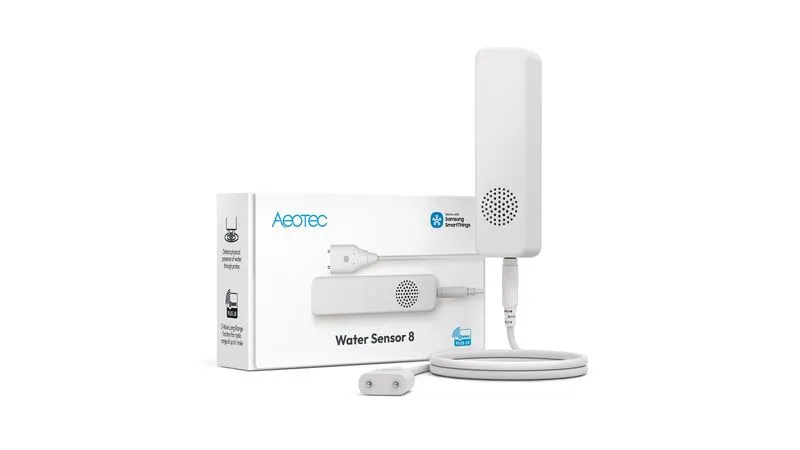
Disclosure: Rocks on Galaxy has no commercial relationship with Aeotec or Nabu Casa for this article and has not tested these devices. This is a sourced news analysis, not a hands-on review, with no rating and no affiliate links. Hero image: official Aeotec product photo of the Water Sensor 8 (store.aeotec.com), resized and padded on white, otherwise unedited. Prices checked on November 20, 2026.
Tags :
- Z Wave
- Z Wave Long Range
- Aeotec
- Home Assistant
- Works with Home Assistant
Share :