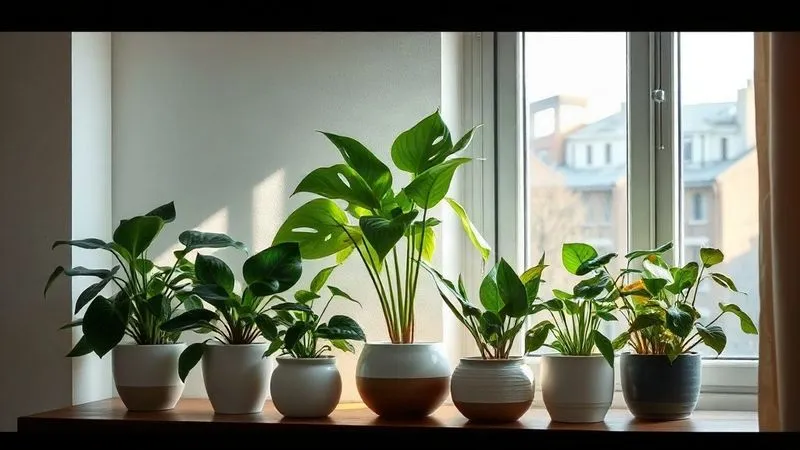
Heating's back on: how to adjust watering for indoor plants
- News
- Rocks on Galaxy
- Plantes
- 05 Oct, 2026
- 0
When the heating comes back on in October, you should generally water your indoor plants less often, not more. With shorter days, they grow more slowly and use less water: the air gets drier, but the potting soil stays moist for longer.
Why October changes everything
It all starts with light. As Journal Maison explains, as days get shorter, photosynthesis slows down. The plant produces less energy, its growth slows, and its water needs drop along with it.
Evapotranspiration, meaning the water absorbed by the roots and then released through the leaves, falls sharply. The result: the potting mix stays moist much longer than in summer, even without extra watering.
Most tropical plants then enter a kind of dormancy. It's not hibernation, more like hitting the brakes hard. Sticking to your July routine means drowning roots that no longer need that much.
The risk is well known: soggy soil deprives roots of oxygen and encourages the fungi responsible for root rot. The first signs, such as yellowing leaves, a blackening base or a soft stem, are often mistaken for thirst. So people water even more, and make the problem worse.
Dry air doesn't mean thirsty plants
This is the classic heating-season trap. Heated indoor air is very dry: according to Ctendance, a living room in winter often tops out around 30% humidity, while a tropical plant is used to 70 or 80%.
That lack of humidity prompts many people to reach for the watering can. It's often a mistake. Dry air and dry soil are two different things. Journal Maison puts it well: soil that dries more slowly and dry air around the foliage are two separate problems that call for two separate fixes.
Brown leaf tips usually point to air that's too dry. They're no reason to water the pot more.
The 1-inch finger test
Rather than following a schedule, trust the soil. The technique both sources recommend is simple: push your index finger about 1 inch (2–3 cm) into the potting mix.
- If the soil still sticks to your finger, wait.
- If it's dry and crumbly at that depth, you can water.
Don't rely on the surface alone. In fall, the top of the pot dries faster than the core, since evaporation happens mostly from the top. Soil that looks dry can still be soaked a couple of inches down.
Ctendance also suggests a moisture meter, a small probe you stick into the soil, for those who'd rather measure than guess.
Space out watering, gradually
There's no one-size-fits-all frequency: it depends on the species, pot size, potting mix, light and room temperature. The principle, however, is universal: water less often.
Journal Maison advises making the change in steps over three to four weeks rather than switching abruptly. Lengthen the interval little by little while watching how each plant responds.
A few habits help with this transition:
- Check drainage: excess water must be able to drain out the bottom of the pot.
- Empty saucers after each watering so roots aren't left sitting in water.
- Water slowly and deeply so the water reaches all the roots, rather than giving small, frequent sips.
- Use room-temperature water rather than cold tap water, Ctendance advises.
Watch out for plants that spent the summer outdoors, too. Once brought inside, potted citrus in particular, they face very different air and light. Journal Maison recommends cutting back on watering as soon as they come indoors.
Placement near radiators
Location matters as much as the watering can. A poorly placed plant gets stressed and needs more water to compensate, Ctendance notes.
- Avoid pushing pots right up against a radiator or heater.
- Beware of hot, south-facing windows.
- Choose a bright but moderate spot.
- Regularly rotate plants that lean toward the window for more even growth.
With less light available, wiping leaves with a damp cloth also helps: dust blocks some of the light.
Managing air humidity without drowning the soil
If dry air is the problem, it's the air you need to fix. There are several simple solutions:
- Misting the foliage, though not on plants with fuzzy leaves such as African violets, Ctendance points out;
- Grouping plants together, which creates a more humid microclimate thanks to the water they release;
- A tray of clay pebbles or damp gravel under the pot, without the bottom of the pot sitting in water;
- A humidifier, worthwhile if you have lots of plants.
Tropicals and succulents: two different routines
Not all plants slow down at the same time. Succulents are the first victims of overly generous fall watering, according to Journal Maison. Their winter dormancy starts earlier, sometimes as early as late September.
A cactus or a crassula can go several weeks without water once temperatures drop. Tropicals like pothos, ficus, monstera and philodendron still need a minimum: cut back on watering, but don't stop entirely.
Flowering plants that are still active, such as some orchids or anthuriums, also need case-by-case attention. Either way, the finger test has the final say.
Put fertilizer on pause
One last fall adjustment: fertilizer. Since the plant has nearly stopped growing, it no longer absorbs those nutrients. Continuing to feed it causes mineral salts to build up in the soil, which can burn the roots, warns Journal Maison.
Ctendance recommends stopping feeding in winter, with exceptions such as flowering plants in full bloom. The same logic applies to repotting: it's better to wait until spring, when growth picks up again, because fresh potting mix dries slowly and increases the risk of overwatering.
In short: observe more, water less. Find more plant care tips in our plants section.