Robot vacuum + Home Assistant in the US: check the integration first
- News
 Andrea R.
- Maison connectee
- Published
- 1
A robot vacuum can be "smart" on the box and still be a poor fit for your Home Assistant setup. Two models with the same suction and the same price can differ in the thing you will live with every day: does Home Assistant talk to the robot over your Wi-Fi, or through a vendor's servers, or not at all?
This guide is for readers who already run Home Assistant (or plan to) and are shopping for a robot vacuum in the United States, where Andrea is now based. We read the current integration pages instead of the marketing pages, and we sort the market by how each robot connects. We have not tested any robot vacuum ourselves. What follows is documentation analysis, with every claim linked to its source and dated 4 November 2026.
Key takeaways
- Home Assistant has four ways to reach a robot vacuum: a local core integration, a cloud core integration, Matter, and community integrations installed through HACS. The brand matters less than which of these your model uses.
- Roomba is the most local option on paper, but only for older Wi-Fi models. Home Assistant says it does not work with the new x05 models (105, 405, 505).
- Roborock uses local polling, yet its robot blocks that local API when it cannot reach Roborock's servers. Only Matter keeps working fully offline, with fewer controls.
- Ecovacs, Shark IQ and SwitchBot's cloud integration all depend on a vendor cloud. SwitchBot's also needs Home Assistant to be reachable from the internet.
- Room cleaning from Home Assistant's own areas (
vacuum.clean_area) arrived in 2026.3 for Matter, Ecovacs and Roborock.- In the US, new foreign-produced models face FCC limits since 28 July 2026, so your shortlist is mostly what is already on sale.
Read the integration page before the spec sheet
Spec sheets talk about suction and obstacle avoidance. Home Assistant's documentation tells you how the integration gets its data, and that tells you most of what you need. Four routes exist:
- Local core integration. Home Assistant talks to the robot on your network. Fast, and it can survive a vendor outage.
- Cloud core integration. The integration is official, but it logs into the vendor's account and relays through its servers.
- Matter. A cross-ecosystem standard with a limited set of vacuum controls. See our Matter, Thread and Zigbee guide for the basics.
- Community integration (HACS). Written by volunteers, installed by hand, not maintained by Home Assistant. It can offer more than the official one, and it can break after an update.
We already explained how far you can push privacy, from vendor local modes to rooting with Valetudo, in our robot vacuum privacy and local control guide. This article is the buyer-side companion: it sorts brands by how they connect.
Six brands, six connection routes
The table summarizes what the documentation says today. "Local" means Home Assistant can talk to the robot without a vendor server in the loop for control.
| Brand / route | Integration type | IoT class | Local or cloud | Main limit to know |
|---|---|---|---|---|
| Roborock (core) | Official, hub | Local polling | Local control, cloud for setup and fallback | Robot locks its local API if it cannot reach Roborock's servers |
| iRobot Roomba (core) | Official, device | Local push | Local | Does not work with x05 models; some models do not give up their password |
| Ecovacs Deebot (core) | Official, hub | Cloud push | Cloud, optional self-hosted server | Device support depends on community reverse engineering |
| Shark IQ (core) | Official, hub | Cloud polling | Cloud | Short documentation, room cleaning through a Shark-specific action |
| SwitchBot (cloud) | Official, hub | Cloud polling | Cloud, webhook back to Home Assistant | Needs a publicly reachable Home Assistant or Home Assistant Cloud |
| SwitchBot K20+ Pro (Matter) | Matter over Wi-Fi | Local push (Matter) | Local | Matter controls only; one certified robot on the list |
| Dreame, MOVA (HACS) | Community, not official | n/a | Cloud account or LAN, by choice | Not maintained by Home Assistant; check the model list first |
Narwal, and Eufy's RoboVac line, have no dedicated core integration in Home Assistant's repository as of 4 November 2026. If you own one, the realistic routes are Matter (if your model supports it) or a community project.
Brand by brand: what the documentation promises
Roborock: local polling, with a catch
The Roborock integration describes a hybrid model. Home Assistant uses local communication for commands and polling, but relies on the cloud for setup and fallback control. The S, QV, Qrevo and Saros series are fully supported; Q-series support varies.
The catch is in the FAQ. Can you block the robot from the internet? No: when the vacuum is disconnected, it blocks its local API until it can reach Roborock's servers. The same FAQ says that over Matter the vacuum can work fully offline, with fewer controls and sensors.
Roborock began pushing Matter firmware to several models in April 2025, including the S8 MaxV Ultra, Saros Z70, Saros 10 and Qrevo Master, according to its own announcement. If you buy a Roborock, confirm Matter support for your exact model in the Roborock app, because the release said it varies by model and ecosystem.
iRobot Roomba: the most local, for older robots
The Roomba integration is classified as local push. It has been tested with the s9+, 980, 960, 890, Roomba Combo Essential and Braava jet m6, and older Wi-Fi models such as the 690 should work.
Two warnings from the same page. First, it currently does not work with the newer x05 Wi-Fi models (Roomba 105, 405, 505). Second, setup retrieves the robot's own password locally, and some models, including the j7, do not provide it that way. For those, the documentation points to a third-party tool, not maintained by Home Assistant, that asks for your iRobot credentials.
The company behind the robots also changed hands: on 23 January 2026, iRobot said Picea had acquired 100% of its equity after a court-supervised Chapter 11 process, and that a US subsidiary called iRobot Safe would focus on data protection and governance, in its press release. A robot controlled locally is a hedge against whatever happens to the cloud next.
Ecovacs: official, cloud-based, with a self-hosted escape
The Ecovacs integration covers the Deebot vacuums and GOAT mowers. It is classified as cloud push. During setup, you can choose a self-hosted instance instead of Ecovacs' servers, with "requirements and limitations" to read first. Ecovacs publishes no API documentation, so device support rests on owners' reverse engineering.
Shark IQ: cloud polling, but with room cleaning
The Shark IQ integration is a cloud-polling hub. Its one documented action, sharkiq.clean_room, cleans one or several user-defined rooms.
SwitchBot: two very different routes
SwitchBot is the interesting case because it appears twice. The SwitchBot Cloud integration receives vacuum state updates through a webhook sent from SwitchBot's cloud. For that webhook to arrive, Home Assistant must be reachable from the internet, either through a public external_url or a Home Assistant Cloud subscription. On a local-only install with neither, the page says the cloud cannot deliver the updates.
The other route is SwitchBot Matter, a Works with Home Assistant partner. Its list includes the SwitchBot Multitasking Robot K20+ Pro, certified over Matter on Wi-Fi without a hub, with all connectivity happening locally.
Dreame and MOVA: the community route
Dreame has no core integration, but the community-built Dreame Vacuum integration for HACS covers Dreame, MOVA, Mijia and Trouver robots. Its README says you can connect with a DreameHome, MovaHome or Xiaomi Home account, or "fully locally without the cloud". It lists live multi-floor maps, room cleaning with per-room suction and water settings, and obstacle photos.
Be careful here. The project's Supported Devices page tells you whether your exact model works and in which mode. And it is volunteer work: nobody owes you a fix if a Home Assistant release breaks it. The repository was still shipping releases in early November 2026.
Rooms are the feature that decides
The most useful Home Assistant feature for a vacuum is cleaning a room when something happens: "kitchen after dinner", "hallway when everyone leaves".
Home Assistant 2026.3 added the clean area action. It uses the areas you already defined in Home Assistant, and you map the robot's own segments to them in the vacuum entity's settings. At launch it was supported by Matter, Ecovacs and Roborock. If the segments change after a remap, Home Assistant raises a repair issue.
Roomba and Shark IQ were not on that launch list. Shark and Dreame's community integration have their own room tools, but they do not use Home Assistant's areas in the same unified way. If you plan voice control by area, that is a real difference.
What breaks first: a quick failure test
Before buying, ask four questions and check the table above.
- If the vendor's cloud is down for a day, can Home Assistant still start a clean? Local push (Roomba) and Matter say yes. Roborock needs its servers reachable. Ecovacs, Shark and SwitchBot Cloud say no, unless you use Ecovacs' self-hosted option.
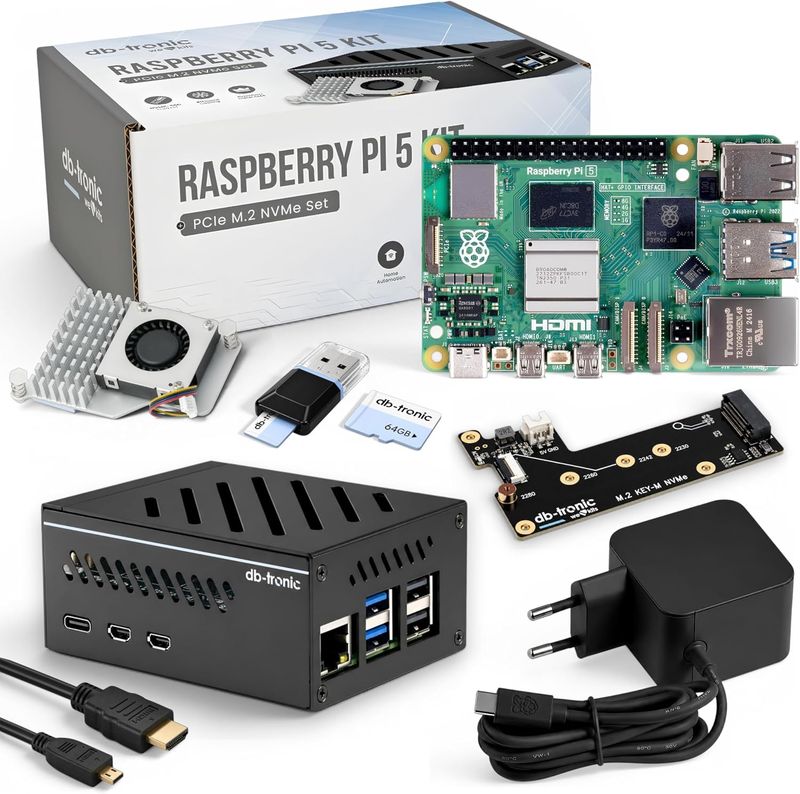
- Does your Home Assistant box need to be reachable from the internet? Only for SwitchBot Cloud's webhook. A box on your LAN, like the Raspberry Pi 5 setup we reviewed in our db-tronic kit test, is not reachable from outside unless you set that up.
- Is your exact model on the list? Check the model, not the series, on the integration page, and check
clean_areasupport if you want room automations. - Who maintains the integration? Home Assistant for core ones, volunteers for HACS ones. Roborock's core integration is rated Silver on Home Assistant's quality scale.
The US catch: the shortlist is what is already authorized
On 28 July 2026, the FCC added foreign-produced "advanced robotic devices" to its Covered List. Consumer Reports notes that the ban covers robot vacuums and vacuum-mop combos, and that dominant makers such as Roborock, Ecovacs and Dreame are Chinese companies.
The practical reading: models already authorized stay on sale and keep working, and new foreign-produced models need a conditional approval. By 23 October 2026, the only robotic floor cleaner among the approvals listed in a Steptoe legal analysis was a Matic Robots model. The other approvals covered industrial or lawn robots, drones, routers and inverters.
So in the US, the integration route matters even more: the models you can buy are mostly the ones whose Home Assistant pages you can read today.
Who should choose what? Our analysis
Conclusions from the documentation, not from tests.
- You want the most local control and own or can find an older Wi-Fi Roomba. Roomba is the most local on paper. Avoid the x05 line, and confirm the password step works for your model first.
- You want mapping, rooms and a mainstream brand. A Roborock from the S, QV, Qrevo or Saros families gives you the best-documented official integration and clean area support. Accept that it needs Roborock's servers reachable.
- You use Apple Home, Google Home or Alexa too. Pick a model with Matter, then add the vendor app only for maps. Matter Alpha notes that Apple Home still lacks mapping, no-go zones and mop-drying controls, so Matter is a daily driver, not a replacement for the app.
- You want a hub-free local robot. The SwitchBot K20+ Pro is the one robot on SwitchBot's Works with Home Assistant list, over Matter on Wi-Fi.
- You enjoy tinkering. A Dreame or MOVA with the HACS integration offers the richest feature list, with the maintenance risk that comes with it.
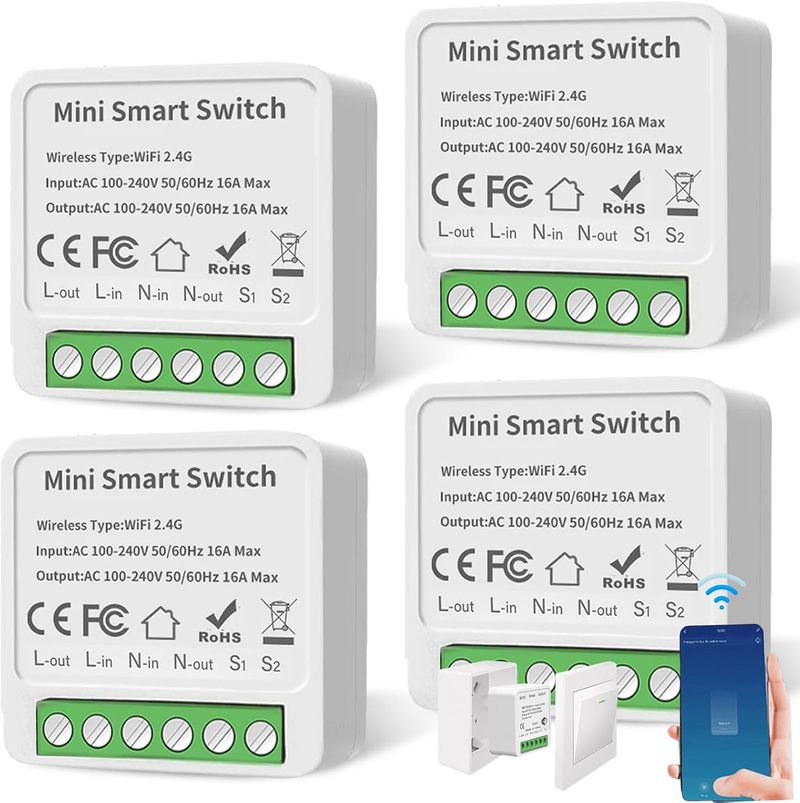
Our bias is toward local control. We have also tested a Wi-Fi switch module flashed to run locally in Home Assistant, in our Behogan switch test, and the lesson transfers: a local device keeps working when a vendor changes its terms. For robot vacuums, "local" has to be checked model by model. See also our Zigbee vs Matter over Thread study.
FAQ
Does Home Assistant work with every robot vacuum?
No. Core integrations exist for Roborock, Roomba, Ecovacs, Shark IQ and SwitchBot. Others rely on Matter or a community integration, and some models, such as Roomba's x05 line, are explicitly unsupported.
Is Matter enough for a robot vacuum in Home Assistant?
For starting, stopping, docking and room cleaning, usually yes. Roborock says Matter keeps working fully offline but with limited controls and sensors, so keep the vendor app for maps and no-go zones.
Can I block my robot vacuum from the internet and still control it?
It depends on the route. A Roborock blocks its local API when it cannot reach Roborock's servers. Matter and Roomba's local integration do not need the vendor cloud. Ecovacs offers an optional self-hosted server with caveats.
Which robot vacuum is best for Home Assistant in the US?
There is no single answer. On documentation alone, Roborock has the best-supported official integration, an older Roomba is the most local, and the SwitchBot K20+ Pro is a hub-free Matter option. Check that your exact model is still on sale.
Transparency: Rocks on Galaxy is independent and has no affiliation with the brands mentioned. We did not test the robot vacuums discussed here, and this article contains no commission links. Facts come from the sources linked above and were checked on 4 November 2026.