Tesla Home Energy Guide 2026: Powerwall 3, Powershare Backup and California VPP Records
- News
- Rocks on Galaxy
- Tesla
- 21 Oct, 2026
- 1
For years, "Tesla energy" meant two very different things: a Powerwall on the garage wall, and Megapacks the size of shipping containers at utility sites. In autumn 2026 the home side suddenly got much more interesting. Between September 9 and October 8, Tesla made Cybertruck Powershare work alongside Powerwall 3, opened Powershare home backup to new Model 3 and Model Y, and watched California Powerwall owners break the residential virtual power plant record twice.
This guide merges our coverage of those announcements into one page built around a single question: what can a Tesla car and a Powerwall actually do for your house, and how do you automate it?
The short version
- Powershare + Powerwall 3: since September 10, 2026 a Cybertruck can back up a home at the same time as a Powerwall 3 (more than three extra days, per Tesla).
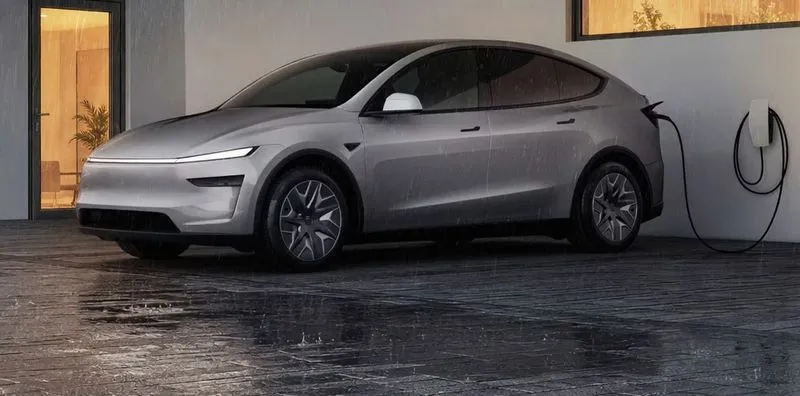
- Model 3 and Model Y: since October 6, 2026 new cars ordered on or after October 1 can extend home backup with a Powerwall 3, at up to 11.52 kW. US and Puerto Rico only.
- Virtual power plants: 580+ MW from 140,000 California home batteries on September 9, then 601 MW from 85,774 Powerwall homes on October 6.
- Not home products: Megapack 3 and China's 2.2 kW V2L are useful context, but they won't power your whole house.
Three ways a Tesla can power a home in 2026
The terms get mixed up constantly, so let's separate them first. They differ in how much power flows, whether the house stays connected, and who controls the battery.
| Mode | What it does | Vehicles (Oct 2026) | Power | Extra hardware |
|---|---|---|---|---|
| Vehicle-to-load (V2L) | Outlets on the car power individual appliances | Cybertruck, Model Y Premium/Performance (US, 2.4 kW); every Model 3/Y in China (2.2 kW) | 2.2–2.4 kW AC | Adapter in some markets |
| Powershare home backup (V2H) | The car feeds the house during an outage, through the gateway | Cybertruck; new Model 3/Y with Powerwall 3 | Up to 11.5 kW | Universal Wall Connector + Powershare Gateway or Powerwall 3 |
| Vehicle-to-grid (V2G) | The car exports to the grid | Pilots only (Cybertruck in Texas, AC V2G work with PG&E) | Program-dependent | Utility enrolment |
| Powerwall VPP | The home battery discharges to the grid on demand | Any enrolled Powerwall | ~7 kW per home in the Oct 6 event | Program enrolment in the Tesla app |
Cybertruck + Powerwall 3: the missing piece
Until September 10, 2026, Powershare had one frustrating gap: a Cybertruck or a Powerwall could back up a house, but not both together as one microgrid. That locked out exactly the people most invested in Tesla's ecosystem. As Electrek reported, Tesla had promised this for 2025, then slipped it to mid-2026. The engineering problem was real: two grid-forming devices have to coordinate safely across hardware generations and certifications.
Now the Powerwall 3 runs the house as before and the truck's roughly 123 kWh pack extends runtime. Tesla compares it to nine extra Powerwalls at 13.5 kWh each and promises more than three additional days of backup. Treat that as capacity math. A house running a heat pump and charging another EV will drain it much faster.
- Power into the home: up to 11.5 kW.
- Required: Universal Wall Connector plus Powershare Gateway; Electrek previously cited around $4,000 installed, with some quotes far higher.
- Powerwall 2 and Powerwall+ compatibility: expected later, not included in this release.
Model 3 and Model Y join Powershare
On October 6, 2026 Tesla Energy extended Powershare home backup to new Model 3 and Model Y paired with a Powerwall 3 (Electrek). It's the first time Tesla's mass-market cars can power a house. The same day, software update 2026.38.3 also added Emergency Drive Away, according to TeslaNorth.
| Item | Model 3 / Model Y | Cybertruck |
|---|---|---|
| Extra backup (Tesla figure, 30 kWh/day home, 90% charge) | Over two days (Standard trims: up to two days) | More than three days |
| Max continuous output | 11.52 kW | 11.5 kW |
| Eligibility | Guaranteed on cars ordered on or after Oct 1, 2026 | All Cybertrucks |
| Grid export | No | Pilots only |
| Markets | US and Puerto Rico | US |
Older cars may or may not work: "some, but not all" have the required PCS2 Lite inverter. Check Software > Additional Vehicle Information > Powershare Support in the car. Model S and Model X are excluded, and Tesla support has to enable the feature even if you already own a Powerwall 3 and a Wall Connector. Ford offered home backup on the F-150 Lightning back in 2022, so Tesla is catching up here rather than leading.
California's Powerwall fleet becomes a power plant
A virtual power plant (VPP) links thousands of home batteries so they discharge together when the grid is stressed. Owners keep a backup reserve in the Tesla app and can opt out of events. In California, pay comes through programs such as DSGS (Demand Side Grid Support) and ELRP (Emergency Load Reduction Program).
| Date (2026) | Event | Batteries | Peak | Source |
|---|---|---|---|---|
| Sept 9 | Powerwall-only event | ~69,000 homes | 500+ MW | Tesla |
| Sept 9 (reported Sept 21) | Sunrun + Tesla heat-wave evening, 3 hours | 140,000+ batteries, ~110,000 Powerwalls | 580+ MW (Powerwalls ~517 MW) | Electrek |
| Sept 10 | Southern California Edison request | Same fleet | 140+ MW | Electrek |
| Oct 6 (reported Oct 8) | Powerwall evening dispatch | 85,774 homes | 601 MW, 932 MWh delivered | TeslaNorth |
On October 6 the whole California Powerwall fleet, including non-participants, peaked at 634 MW, while statewide demand hit 45,622 MW at 5 p.m. That's about 7 kW per participating home. On pay, the CPUC quotes $2 per kWh for non-residential ELRP participants, and Tesla paid $9.9 million to US VPP participants in 2024. Tesla didn't say which program called the October event or what owners will earn, so don't count on a specific payout.
Automating a Powerwall with Home Assistant
This is where a smart home pays off. Once your energy data is in Home Assistant, you can react to outages, VPP events and tariffs without opening the Tesla app. (New to Home Assistant? Start with our Home Assistant 2026 guide.)
| Integration | Connection | Best for |
|---|---|---|
| Tesla Powerwall (core) | Local, to the Backup Gateway | Powerwall 2 / Powerwall+ owners who want fast local data |
| Tesla Fleet (core) | Tesla's official cloud API | Powerwall 3, plus your car in the same account |
| Teslemetry (core, paid service) | Cloud with streaming | Lower-latency vehicle and energy data |
Four automations worth building:
- Outage triage. When the grid status sensor goes off-grid, switch off the dryer, EV charging and pool pump, and push a notification with battery percentage.
- Car as a reserve. If an outage lasts more than two hours and the Powerwall drops below 30%, remind yourself to plug in the Model Y or Cybertruck for Powershare.
- VPP evenings. When the Powerwall starts exporting during a heat wave, pause the heat pump or pre-cool the house earlier in the afternoon so the export doesn't come out of your comfort.
- Reserve by forecast. Raise the backup reserve automatically when a storm or red-flag warning appears in your weather integration.
A word of caution: control commands through cloud APIs can lag or fail, and Tesla can change what the API exposes. Keep critical safety decisions (like load shedding during an outage) on local devices where possible.
What doesn't power your house: Megapack 3 and V2L
Two stories that often get lumped in with home energy belong elsewhere:
- Megapack 3 (5 MWh, 2.5 MW, LFP) went into production at Brookshire, Texas in September 2026, and Belgium's 700 MW / 2.8 GWh Green Turtle project with 640 units started construction on September 17. That's grid-scale storage for utilities and developers.
- China's Model 3 refresh brought a 16-inch screen and 2.2 kW vehicle-to-load (Electrek). V2L runs a kettle or a rice cooker through an adapter. It isn't whole-home backup.
For the bigger picture, Tesla deployed 13.7 GWh of storage in Q3 2026, up 9.6% year on year but below the 14.2 GWh record of Q4 2025 (Electrek). Financial results are due on October 21, 2026.
Buyer checklist before you spend $4,000+
- Confirm in the car menu that your vehicle supports Powershare. Don't rely on the order date alone for cars before October 2026.
- Get at least two installer quotes for the Wall Connector and gateway work.
- Check your utility's VPP programs and the backup reserve they allow.
- If you're in Europe, wait: none of these home backup features are available there yet.
- Plan your Home Assistant integration before the install so the gateway is on your network from day one.
FAQ
Can my Model 3 or Model Y sell power to the grid?
No. Tesla says grid support isn't available for Model 3 or Model Y. Powershare only feeds your home during an outage.
Does Powershare work with a Powerwall 2?
Not yet. Powerwall 2 and Powerwall+ support is listed as coming soon; the October 2026 features need a Powerwall 3.
How much do VPP participants earn?
It depends on the program. Tesla paid $9.9 million to US participants in 2024, but it didn't publish payouts for the October 2026 event.
Is any of this available in France or the rest of Europe?
No. Powershare home backup is US and Puerto Rico only as of October 2026.
Can Home Assistant control a Powerwall 3 locally?
Mostly through the cloud. The local Powerwall integration targets older gateways; Powerwall 3 owners generally use Tesla Fleet or Teslemetry.
More Tesla coverage: our Robotaxi and Cybercab guide and the Tesla planet.
Sources: Electrek, TeslaNorth, Energy-Storage.News, GIGA Storage, Paul Tan, Home Assistant documentation. Figures are as reported by Tesla and the press in September–October 2026.