Warmer Soil Makes Tree Roots Feed Soil Microbes Less, Dartmouth Study Finds
- News
- Rocks on Galaxy
- Plantes
- 18 Oct, 2026
- 1
What happens underground is easy to forget, but it keeps our trees and gardens alive. A new Dartmouth-led study, reported on October 16, 2026 by Phys.org, finds that a warmer climate could slow down one of the key exchanges between roots and soil.
Roots that feed the soil
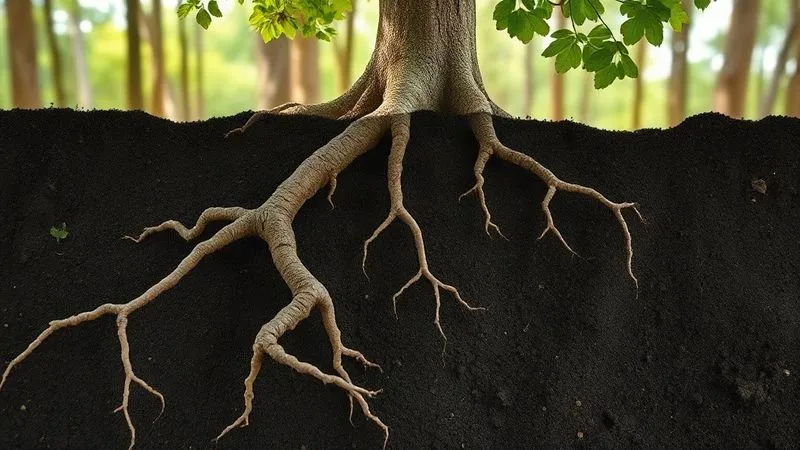
The study looks at root exudation: plants release soluble carbon compounds from the tips of their roots. This carbon feeds the microbes in the surrounding soil, making them more active. Those microbes break down organic matter and release nutrients that the roots can then absorb. It’s a give-and-take that underpins soil health.
What the researchers found
Postdoctoral researcher Thomas Muratore and his colleagues tested how two common tree species react to higher temperatures and to more nitrogen in the soil, two possible side effects of climate change. To measure exudation, they placed living fine roots, still attached to the tree (including oak), in syringes filled with a carbon-free nutrient solution, then measured the carbon released.
- The size and shape of the root systems didn’t change.
- Higher temperatures reduced exudation.
- Extra nitrogen increased exudation, whatever the temperature.
“We’re unlikely to see nitrogen levels go up everywhere,” Muratore said. “So exudation will likely decrease in places where temperatures go up but nitrogen levels don’t.” The results were published in New Phytologist.
A bigger picture underground
The same team contributed to a global database of belowground traits covering more than 10,000 plant species, published in Scientific Data, and to a paper urging scientists to study roots, cloning and other underground strategies together. They also note that most root research comes from the US and Europe.
Rocks take
For gardeners, the lesson is simple: soil life depends on roots, and heat stress affects that link even when plants look fine above ground. Mulching and keeping soil cooler and moist in summer helps. If you have soil temperature sensors in your garden, this is one more reason to watch those readings, not just air temperature.